

Frequently Asked Question on document legalisation at Embassies in Nigeria
Get answers to frequently asked questions on document legalisation at embassies in Nigeria. Complete guide for legalising documents for international use abroad.
Navigating the complex world of document legalisation at embassies in Nigeria can feel overwhelming, especially when your future depends on getting it right. Whether you’re planning to study abroad, relocate for work, or handle international business transactions, understanding the frequently asked question on document legalisation at embassies in Nigeria is crucial for your success.
Read through the ultimate guide to document authentication in Nigeria 2026
Every year, thousands of Nigerians face delays, rejections, and unnecessary expenses simply because they lack proper guidance on embassy document procedures. This comprehensive guide addresses the most common concerns and provides actionable solutions to help you legalise documents at embassies in Nigeria efficiently and correctly the first time.
What is Document Legalisation and Why Do You Need It?
Document legalisation is the official process of authenticating your Nigerian documents for international recognition. When you need to legalise document at embassies in Nigeria for use abroad, you’re essentially getting foreign governments to accept your documents as genuine and legally binding.
The process involves multiple verification stages. First, your documents must be notarized by a Nigerian notary public. Then, they require authentication from the Ministry of Foreign Affairs in Abuja. Finally, the destination country’s embassy or consulate in Nigeria provides the final stamp of approval.
Understanding this process is essential because improperly legalized documents can result in visa rejections, delayed admissions, or cancelled job opportunities. International institutions require this verification to prevent fraud and ensure document authenticity.
How to Legalise Document at Embassies in Nigeria – Step-by-Step Process
The journey to legalise documents in Nigeria through embassies follows a structured approach that demands attention to detail. Here’s the comprehensive process that thousands of Nigerians have successfully navigated:
Initial Document Preparation and Notarization
Start by gathering original copies of all documents you need legalized. Common documents include birth certificates, marriage certificates, academic transcripts, degree certificates, and professional licenses. Each document must be in perfect condition without tears, stains, or alterations.
Take these documents to a recognized notary public in Nigeria. The notary will verify your identity, witness your signature if required, and affix their official seal. This step costs between ₦2,000 to ₦5,000 per document depending on the notary’s location and document complexity.
Ensure you obtain multiple certified copies during notarization. Many people make the mistake of getting just one copy, only to discover later that they need additional copies for different purposes or in case of loss during the process.
Ministry of Foreign Affairs Authentication
After notarization, your documents need authentication from Nigeria’s Ministry of Foreign Affairs in Abuja. This step verifies that the notary public who handled your documents is legitimate and registered with Nigerian authorities.
The Ministry of Foreign Affairs charges ₦5,000 per document for authentication. Processing typically takes 3-5 business days, but during peak periods (especially between June and September when many students apply for visas), delays can extend to two weeks.
Submit your documents early in the morning to avoid long queues. The ministry operates on a first-come, first-served basis, and daily quotas sometimes limit the number of documents they can process.

Embassy-Specific Requirements for Document Legalisation
Different embassies in Nigeria have varying requirements for how to legalise documents at embassies in Nigeria. Understanding these nuances prevents costly delays and rejections.
UAE Embassy in Nigeria Document Legalisation Requirements
Before initiating your VFS document attestation process, ensure you complete the preliminary attestation steps within Nigeria. This foundational work is crucial for a successful UAE embassy attestation in Nigeria
Nigerian attestation requirements include: Your documents must first be attested by relevant Nigerian authorities. Educational certificates require verification from the issuing institution and subsequent attestation by the Federal Ministry of Education. Personal documents like birth and marriage certificates need attestation from the Federal Ministry of Interior or relevant state ministries.
Document preparation standards are equally important. All documents must be in excellent condition without tears, stains, or alterations. Photocopies are generally not acceptable unless specifically requested. Documents in languages other than English or Arabic require certified translations.
Financial preparation involves understanding the complete cost structure. VFS charges service fees in addition to embassy attestation fees. Payment methods are typically limited to specific options, so verify accepted payment types beforehand.

How to Legalise Document at the Mexico Embassy in Nigeria
Legalizing documents at the Mexico Embassy in Nigeria requires a systematic three-step authentication process that ensures your Nigerian documents gain legal recognition for use in Mexico. The procedure consists of an act of certification by a consular officer so that those documents are valid in Mexico, but you must first complete the preliminary authentication stages within Nigeria before approaching the Mexican diplomatic mission. Start by having your documents notarized by a recognized Nigerian notary public, then proceed to the Ministry of Foreign Affairs in Abuja for official authentication – Request at the Ministries of Foreign Affairs of Nigeria is a mandatory requirement before embassy processing.
The Mexico Embassy document legalization process typically costs between $50-100 per document and takes 7-10 business days, though processing times may extend during peak application periods when many Nigerians apply for Mexican visas or work permits.
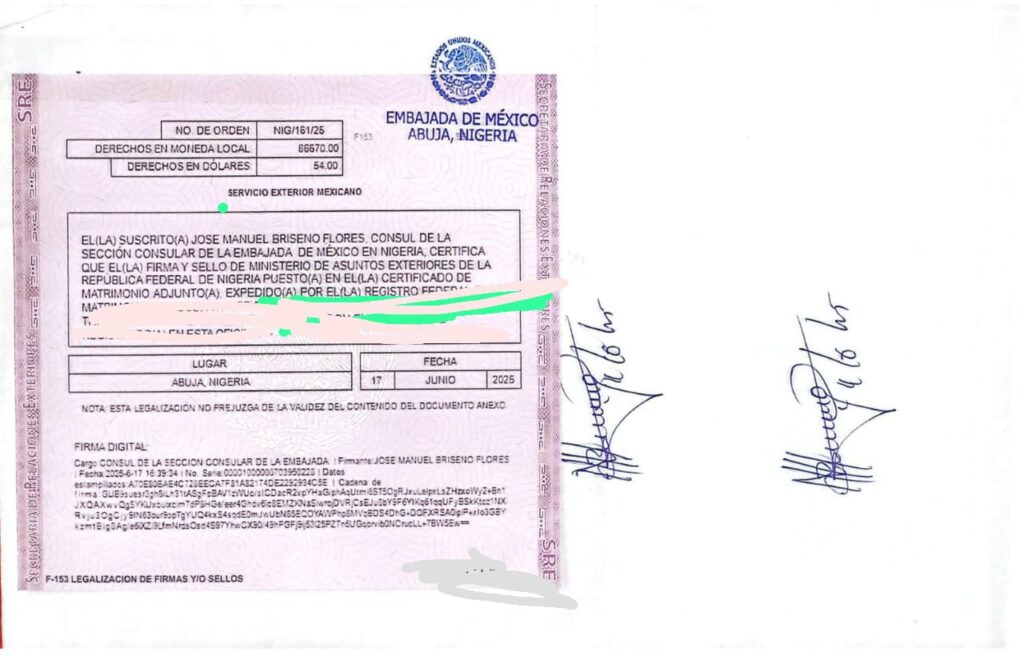
Successfully completing document legalization at the Mexico Embassy demands meticulous attention to document quality and proper preparation to avoid costly rejections and delays. Mexican embassies and consulates provide notarial services, including document authentication, certification, and legalization, ensuring legal recognition for official purposes, but they maintain strict standards for document condition and authenticity verification.
Common documents requiring legalization include birth certificates, marriage certificates, academic transcripts, professional licenses, and police clearance certificates – each must be in pristine condition without alterations, stains, or unclear signatures that could trigger automatic rejection.
The Mexican Embassy in Abuja operates on an appointment-only basis, requiring advance scheduling through their official website, and applicants must present both original documents and certified copies along with proof of Ministry of Foreign Affairs authentication. Professional document processing agents familiar with Mexican embassy requirements can streamline this complex process, though their services add ₦15,000-25,000 to your total costs while potentially saving weeks of processing time and preventing expensive mistakes that could derail your Mexican travel or immigration plans.
How to Legalise Document at the Poland Embassy in Nigeria
Legalizing documents at the Poland Embassy in Nigeria follows a structured authentication process that ensures your Nigerian documents gain legal recognition for use in Poland through the official consular certification system. Legalisation is a certification that the document has been issued by a proper office – by means of legalisation the consul certifies the authenticity of a signature and stamp/seal of a foreign official, which makes your documents legally valid in Poland for various purposes including visa applications, academic admissions, and work permits.
The process requires completing preliminary authentication at the Nigerian Ministry of Foreign Affairs before proceeding to the Poland Embassy document legalization stage, where consular officers verify document authenticity and affix official Polish certification stamps. Legalisation fee is 30 euro per document, and applicants must schedule appointments through the e-Konsulat online system, making this one of the more affordable embassy legalization options available in Nigeria compared to other European missions.
Successfully completing document legalization at the Poland Embassy demands meticulous preparation and understanding of Polish-specific requirements to avoid processing delays and document rejections that could impact your travel or immigration timeline. Without proper legalization, your documents might be rejected or considered invalid by Polish authorities, making the authentication process essential for anyone planning to study, work, or relocate to Poland. Critical documents requiring legalization include birth certificates, marriage certificates, academic transcripts, professional licenses, and police clearance certificates – each must be in pristine condition and properly authenticated by the Ministry of Foreign Affairs before embassy submission. Ensure your documents are original and, where necessary, translated into Polish by a certified translator, as the embassy maintains strict standards for document quality and language requirements.
The Poland Embassy in Abuja typically processes legalization requests within 5-7 business days after receiving properly prepared documents, though peak application periods may extend processing times, making early application submission crucial for time-sensitive opportunities like academic program deadlines or employment visa requirements.

How to Legalise Document at the Cape Verde Embassy in Nigeria
Legalizing documents at the Cape Verde Embassy in Nigeria requires following the standard three-step authentication process that ensures your Nigerian documents gain legal recognition for use in Cape Verde, though the relatively new diplomatic mission established in 2021 offers streamlined services for West African integration purposes. Cape Verde has established her Embassy in Abuja to strengthen diplomatic ties with Nigeria and be closer to the Economic Community of West African States (ECOWAS) Commission, making document legalization more accessible for Nigerians seeking to travel, work, or conduct business in this Atlantic archipelago nation.
The process begins with notarization by a recognized Nigerian notary public, followed by mandatory authentication at the Ministry of Foreign Affairs in Abuja as you must have authenticated the originals of such documents at the Ministry of Foreign Affairs before taking the documents to the embassy for legalization. The Cape Verde Embassy document legalization typically costs between $40-80 per document and takes 5-8 business days, making it one of the more efficient and cost-effective embassy services available to Nigerian applicants compared to larger European or American diplomatic missions.
Successfully completing document legalization at the Cape Verde Embassy requires understanding the specific requirements of this newer diplomatic mission while ensuring all documents meet international standards for consular authentication and recognition. Belarmino Silva was appointed the first ambassador of Cape Verde to Nigeria, establishing modern consular services that prioritize efficient processing for Nigerian citizens seeking Cape Verdean visas, work permits, or conducting international business transactions.
Critical documents requiring legalization include birth certificates, marriage certificates, academic transcripts, professional licenses, and police clearance certificates – each must be in pristine condition and properly authenticated by Nigerian authorities before embassy submission. The embassy maintains strict document quality standards and requires appointments scheduled in advance, though processing times are generally shorter than more established diplomatic missions due to lower application volumes.
Document legalization for Cape Verde serves various purposes including visa applications for tourism or business, academic credential recognition, employment authorization, and investment documentation, with the embassy’s proximity to ECOWAS headquarters facilitating regional economic integration and making it an increasingly important destination for Nigerian professionals and entrepreneurs.

How to Legalise Document at the Slovakia Embassy in Nigeria
Legalizing documents at the Slovakia Embassy in Nigeria requires following the standard three-step authentication process that ensures your Nigerian documents gain legal recognition for use in Slovakia, with the diplomatic mission located at 21st Crescent, Off Constitution Avenue, Central Business District, Abuja providing comprehensive consular services to Nigerian citizens. Slovak Embassy in Abuja runs an inclusive range of consular services to local, Slovak, and international citizens in Nigeria, making document legalization accessible for various purposes including visa applications, academic admissions, work permits, and business transactions.
The process begins with notarization by a recognized Nigerian notary public, followed by mandatory authentication at the Ministry of Foreign Affairs in Abuja before proceeding to the embassy for final legalization. It is necessary to book an appointment to visit the consular section, and applicants must plan accordingly as the embassy operates from 08:00 – 16:00 except official holidays in Slovakia and Nigeria, with processing typically taking 7-10 business days and costing between €40-70 per document depending on document type and urgency.
Successfully completing document legalization at the Slovakia Embassy demands understanding specific Slovak requirements, particularly the mandatory translation stipulation that in Slovakia, all documents in a foreign language must be accompanied by a certified Slovak translation, making proper preparation crucial for avoiding processing delays and document rejections. Critical documents requiring legalization include birth certificates, marriage certificates, academic transcripts, professional licenses, and police clearance certificates – each must be in pristine condition, properly authenticated by Nigerian authorities, and accompanied by certified Slovak translations when required.
The Slovakia Embassy document legalization process serves various purposes including Schengen visa applications for tourism or business, academic credential recognition for Slovak universities, employment authorization, and investment documentation, with the embassy’s modern consular services facilitating smooth processing for Nigerian applicants.
Professional document processing agents familiar with Slovak embassy requirements can streamline this complex process by handling translation coordination, appointment scheduling, and ensuring all documentation meets embassy standards, though their services add ₦20,000-30,000 to total costs while potentially preventing expensive mistakes and reducing processing delays that could affect time-sensitive opportunities like academic program deadlines or employment visa requirements.

Common Challenges When You Legalise Document at Embassies in Nigeria
Even with proper preparation, many Nigerians encounter obstacles during the document legalisation at embassies in Nigeria process. Recognizing these challenges helps you prepare better and avoid common pitfalls.
Document Rejection Due to Technical Issues
Embassy officials reject documents for various technical reasons that applicants often overlook. Faded signatures, unclear photocopies, or missing pages lead to immediate rejections. Similarly, documents with alterations, erasures, or overwriting face automatic disqualification.
Temperature and humidity damage affects many Nigerian documents, especially older certificates stored in poor conditions. Before beginning the legalization process, ensure all documents are clearly legible and in good physical condition.
Translation accuracy presents another major challenge. Many applicants use unqualified translators whose work doesn’t meet embassy standards. Always use certified translators whose credentials are verifiable and who provide official translation certificates.
Timing and Scheduling Complications
Embassy appointments fill up quickly, especially during peak travel seasons. Many applicants underestimate the time needed for the complete legalization process and end up rushing, which increases the likelihood of errors.
The sequential nature of document legalization creates timing challenges. You cannot skip steps or do them simultaneously – each stage must be completed before proceeding to the next. Factor in potential delays at each stage when planning your timeline.
Holiday schedules and embassy closures can disrupt your timeline unexpectedly. Nigerian public holidays, destination country holidays, and embassy-specific closure days all affect processing times.
Costs Associated with Embassy Document Legalisation
Understanding the financial investment required to legalise document at embassies in Nigeria for use abroad helps you budget appropriately and avoid unexpected expenses.
Breakdown of Standard Processing Fees
The complete cost of document legalization includes multiple components. Notarization typically costs ₦2,000-5,000 per document. Ministry of Foreign Affairs authentication adds another ₦5,000 per document. Embassy legalization fees vary by country but generally range from $30-100 per document.
Additional costs include transportation to Abuja (if you live outside the capital), accommodation if overnight stays are necessary, and document reproduction fees. Many people also hire document processing agents, which adds ₦10,000-25,000 to the total cost but can save significant time and reduce stress.
Translation services for non-English documents cost ₦3,000-8,000 per page depending on the language pair and complexity. Technical or legal documents command higher translation fees due to specialized terminology requirements.
Expedited Processing Premium Charges
When time is critical, expedited processing options are available at most embassies for premium charges. These services typically cost 1.5 to 3 times the standard processing fees but can reduce processing time from weeks to days.
Emergency processing for urgent travel situations may be available for exceptional circumstances. However, these services require compelling justification and documentation proving the emergency nature of your request.
Consider expedited processing costs against the value of your time and the urgency of your situation. For time-sensitive opportunities like job offers or academic admissions with tight deadlines, premium charges often prove worthwhile.
Tips for Successful Document Legalisation at Nigerian Embassies
Maximizing your success rate when attempting to legalise document in Nigeria requires strategic planning and attention to detail that many applicants overlook.
Document Organization and Preparation Strategies
Create a comprehensive checklist of all documents required for your specific purpose. Different visa types, immigration categories, and academic programs have varying document requirements. Research thoroughly and gather everything before starting the process.
Make multiple copies of every document at each stage of the process. Keep original documents safe and use certified copies for processing whenever possible. This approach protects you from loss and provides backups if documents need to be resubmitted.
Organize documents in clearly labeled folders with completion dates for each processing stage. This organization system helps track progress and ensures you don’t miss any steps in the complex legalization process.
Working with Professional Document Processing Services
Professional agents who specialize in how to legalise document at embassies in Nigeria can significantly streamline the process. These experts understand embassy-specific requirements and maintain relationships with processing offices that can expedite your applications.
Choose agents with proven track records and verified references from previous clients. Reputable agents provide detailed quotations upfront, maintain regular communication throughout the process, and offer guarantees on their services.
While professional services cost extra, they often save money in the long term by preventing costly mistakes, reducing travel expenses, and minimizing processing delays that could affect your travel or academic plans.
Timeline Expectations for Embassy Document Legalisation
Realistic timeline planning is crucial for successful document legalisation at embassies in Nigeria. Understanding each stage’s duration helps you plan effectively and avoid last-minute rushes that compromise quality.
Standard Processing Durations by Embassy
Most embassies require 7-14 business days for document legalization after receiving properly prepared documents. However, this timeframe only covers the final embassy stage and doesn’t include earlier preparation steps.
The complete process typically takes 3-4 weeks when done efficiently. This includes 2-3 days for notarization, 3-5 days for Ministry of Foreign Affairs authentication, and 7-14 days for final embassy processing.
Peak seasons significantly affect processing times. During summer months when many students apply for visas, processing can take 50-100% longer than standard timeframes. Plan accordingly and start your documentation process early.
Factors That Can Delay the Process
Document quality issues cause the most common delays in embassy processing. Unclear photocopies, missing signatures, or incomplete information require document resubmission and restart the processing clock.
Embassy staff changes and training periods can slow processing as new personnel learn procedures. Similarly, system upgrades or policy changes may temporarily halt processing until staff adapt to new requirements.
External factors like postal strikes, political tensions, or natural disasters can disrupt embassy operations. While rare, these situations can cause significant delays beyond anyone’s control.
Special Considerations for Different Document Types
Various document categories have unique requirements when you need to legalise document at embassies in Nigeria for use abroad. Understanding these specifics prevents processing delays and rejections.
Educational Document Legalisation Requirements
Academic transcripts and degree certificates require verification from issuing institutions before embassy legalization. Many universities have specific procedures for releasing academic records for international use.
Professional certification documents need additional authentication from relevant Nigerian professional bodies. For example, medical certificates require verification from the Medical and Dental Council of Nigeria, while engineering certificates need validation from the Council for the Regulation of Engineering in Nigeria.
Age verification for educational documents can present challenges, especially for older certificates from institutions that may have changed names or closed. Research the current status of your alma mater and obtain proper documentation of any institutional changes.
Legal and Personal Document Authentication
Birth certificates, marriage certificates, and death certificates require specific handling during the legalization process. These documents must be original copies issued by the National Population Commission or state registries.
Court documents including divorce decrees, adoption papers, and legal name changes need authentication from the issuing court before embassy processing. Some courts require additional procedures for releasing documents for international use.
Police clearance certificates have limited validity periods and must be recent when submitted for embassy legalization. Most embassies require police certificates issued within 6 months of the application date.
Frequently Asked Questions About Document Legalisation at Embassies in Nigeria
How long does it take to legalise documents at embassies in Nigeria?
The complete process of document legalisation at embassies in Nigeria typically takes 3-4 weeks when done efficiently. This includes 2-3 days for notarization, 3-5 days for Ministry of Foreign Affairs authentication, and 7-14 days for final embassy processing. However, during peak seasons like summer months, processing times can extend to 6-8 weeks due to increased application volumes.
Can I legalise multiple documents simultaneously at Nigerian embassies?
Yes, you can legalise document at embassies in Nigeria in batches, which is often more cost-effective and time-efficient. Most embassies accept multiple documents in a single application, though each document requires individual processing fees. Bundling documents saves on application fees and reduces the number of embassy visits required.
What happens if my document is rejected during embassy legalisation?
Document rejection requires restarting the entire legalization process after correcting the identified issues. Common rejection reasons include poor document quality, missing signatures, incomplete translations, or failure to follow proper authentication sequences. Most embassies provide detailed rejection letters explaining specific problems that need correction.
Do I need to translate documents before embassy legalisation in Nigeria?
Translation requirements depend on the destination country and document type. English-speaking countries generally accept documents in English without translation, but may require certified translations for documents in other languages. Non-English speaking countries typically require certified translations of all documents into their official language before embassy processing.
Can I use agents to help legalise documents at embassies in Nigeria?
Professional document processing agents can legally assist with how to legalise document at embassies in Nigeria. These agents handle paperwork, manage timelines, and ensure compliance with embassy requirements. While using agents costs extra, they often save time and prevent costly mistakes that could delay your applications.
Conclusion: Your Path to Successful Document Legalisation
Successfully navigating document legalisation at embassies in Nigeria requires careful planning, attention to detail, and realistic timeline expectations. The process, while complex, becomes manageable when you understand each step and prepare thoroughly.
Start your document legalization journey early, allowing ample time for each processing stage and potential delays. Invest in quality document preparation, use certified translators when needed, and consider professional agents for complex applications or tight deadlines.
Remember that proper document legalization is an investment in your future opportunities abroad. Whether pursuing education, employment, or permanent residence in another country, correctly legalized documents open doors that might otherwise remain closed.
Ready to begin your document legalization journey? Start by gathering all required documents and creating a detailed timeline for your specific needs. Contact the relevant embassy directly to confirm current requirements and processing times, as these can change frequently.
Share this guide with others who might benefit from understanding the document legalization process, and bookmark this page for reference during your own legalization journey.
